My daughter has spring allergies that go from “mild sniffles” to “can’t sleep” depending on the pollen count. We tried antihistamines, nasal sprays, and finally – last March – I bought three air purifiers and ran them in different bedrooms to figure out which one actually helps.
90 days later, here’s the verdict on the three most popular HEPA air purifiers under $1,000.
How I tested these air purifiers
Each unit ran 24/7 in a 250 sq ft bedroom for 30 days. I tracked: my daughter’s morning symptom severity (1-10), noise level at night, smart features actually used, and filter cost per year. I also borrowed a friend’s PurpleAir laser PM2.5 monitor to measure real-time particulate before and after running each unit.
Coway Airmega 200M – the value winner
At $229 from Costco, this is the best CADR per dollar I’ve ever tested. CADR (Clean Air Delivery Rate) measures how fast a purifier moves clean air. The 200M is rated for 361 sq ft – more than enough for a bedroom or medium living room.
What sold me: my PurpleAir monitor went from 28 µg/m³ PM2.5 to 2 µg/m³ in 18 minutes. That’s HEPA performance for under $250. My daughter’s morning sneezing dropped from 8/10 to 2/10 within 5 nights.
Pros:
- Quiet on low (24 dB – quieter than a whisper)
- Auto mode with built-in air quality sensor
- Filter is cheap ($35 for 2-pack, lasts 12 months total)
- Costco often sells for $179 with their Costco discount
Cons:
- No Wi-Fi or app
- Sensor LED light is too bright for bedroom; tape it
Levoit Core 400S – the smart pick
The 400S is the Wi-Fi-enabled bigger sibling to the popular Levoit Core 300. At $219, it’s competitive with Coway on price. The CADR rating is 260 sq ft (smaller than Coway), but the app is the best of any purifier I’ve tested.
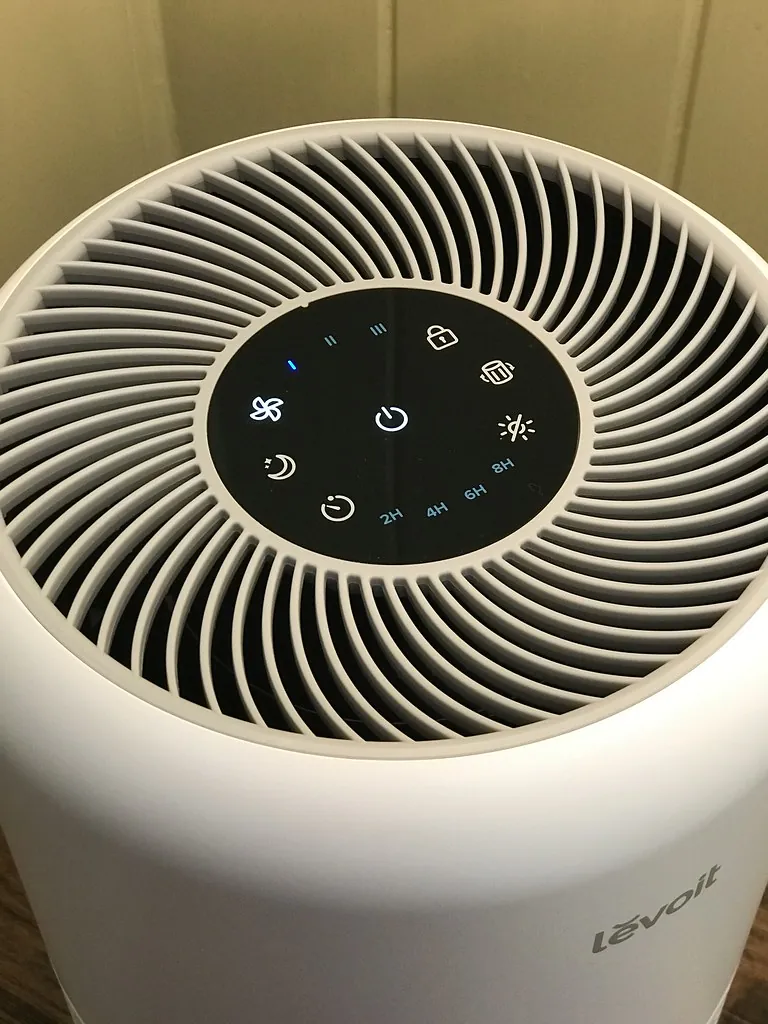
You can schedule run times, get real-time air quality readings on your phone, and check filter life. My favorite feature: it pauses when I’m in a Zoom call (a setting I configured via app). Felt like the future.
Pros: App is excellent, Alexa compatible, scheduling, real-time AQ data.
Cons: Slightly louder than Coway on max, smaller coverage area, filters cost $40/pair.
Dyson Big+Quiet – the luxury option
At $899, the Dyson Big+Quiet is for people who care about industrial design. It’s beautiful. It works fantastically. It also costs 4x as much as the Coway for marginal performance differences.
What it does better: HEPA + activated carbon for VOCs, formaldehyde catalyst (doesn’t need replacing), heater built in for winter, projects clean air across the room with the Dyson airflow tech. What you’re paying for: aesthetics and the brand. Performance per dollar is poor.
Air purifier comparison table
| Feature | Coway 200M | Levoit 400S | Dyson Big+Quiet |
|---|---|---|---|
| Price (June 2026) | $229 | $219 | $899 |
| Coverage | 361 sq ft | 260 sq ft | 1,000 sq ft |
| HEPA filter | True HEPA | True HEPA | HEPA H13 |
| Smart features | None | App + Alexa | App + Alexa |
| Noise (low) | 24 dB | 26 dB | 27 dB |
| Annual filter cost | $35 | $40 | $80 |
| Best for | Bedrooms | Tech lovers | Open spaces |
What size air purifier do I need?
The room CADR rule: take your room’s square footage, multiply by 0.67, that’s your minimum CADR. So a 300 sq ft bedroom needs at least 200 CADR. Most spec sheets list coverage area in sq ft which is the same calculation done for you.
If you want the air cleaned faster (good for allergies), buy a purifier rated for 1.5x your room size.
HEPA filter facts most brands won’t tell you
- True HEPA captures 99.97% of particles 0.3 microns and larger – pollen, dander, dust, smoke
- “HEPA-type” is NOT true HEPA – avoid it
- Activated carbon adds VOC and odor filtration (cooking smells, paint, off-gassing furniture)
- UV-C light is mostly marketing – it doesn’t significantly affect particle removal
- Ionizers can produce ozone (lung irritant); avoid purifiers with ionizers
Where to put your air purifier
- Bedrooms – most important for allergy/asthma; you spend 8 hours there
- Living room – second priority; biggest space, most foot traffic
- Kitchen – if you cook a lot or have an open floor plan
- Don’t put it in basements/laundry rooms unless they have a moisture issue
Run them 24/7 on auto mode. The cost is $5-15/month in electricity. Filters need replacing every 6-12 months.
Which one should you buy?
Bedroom on a budget: Coway Airmega 200M (or wait for Costco $179 sale).
Smart home lovers: Levoit Core 400S.
Open-concept living room over 800 sq ft: Levoit Vital 200S or Coway Airmega 400.
Burning money: Dyson.
For more home appliance picks, see my cordless vacuum comparison, robot vacuum tests, and smart thermostat guide.
Frequently Asked Questions
Do air purifiers really help with allergies?
Yes – particularly for indoor allergens (dust mites, pet dander, mold spores) and seasonal pollen that comes inside on clothes and through windows. HEPA filters capture all of these. My daughter’s morning symptoms dropped from 8/10 to 2/10 within a week.
How often do I need to change the HEPA filter?
Most manufacturers say 6-12 months. In reality, it depends on usage and air quality. Heavy pollen seasons, wildfires, or pet homes need filter changes closer to 6 months. Set a calendar reminder.
Is it safe to leave an air purifier on 24/7?
Yes – they’re designed for continuous operation. Most modern units use 30-60 watts on auto mode, which is about $5-15/month in electricity. The longer it runs, the cleaner your air stays.
Do air purifiers remove cooking smells?
Only if they have activated carbon filters. HEPA alone won’t remove odors or VOCs. Coway Airmega has carbon; Levoit Core 300 has carbon; Dyson has carbon. Check the specs before buying for kitchen use.
