My husband proposed the great coffee experiment in January. He’d been drinking my drip coffee for 8 years without complaint, but then his coworker brought a Breville espresso machine into the office and ruined everything. Suddenly my $89 Mr. Coffee wasn’t acceptable.
I gave myself a $200 cap per machine and tested three different brewing styles for 60 days. Here’s what I learned about getting good coffee on a real budget.
The $200 reality check
Most truly great coffee machines start at $300+ in 2026. The Breville Bambino is $299. The Technivorm Moccamaster is $339. The De’Longhi La Specialista is $700. Under $200, you’re either buying entry-level machines OR you’re buying manual equipment that requires more effort but produces better coffee.
I tested the three real under-$200 options seriously: Bonavita Connoisseur drip, Flair NEO Flex manual espresso, and a Fellow pour-over kit.
Bonavita Connoisseur 8-Cup ($179) – the drip pick
SCA-certified (Specialty Coffee Association), which means it hits the brewing standards Technivorm hits at half the price. Pre-infusion mode, 200F brew temperature, brews 8 cups in 6 minutes. The thermal carafe keeps coffee hot for 4+ hours without a warming plate that scorches.
I brewed daily for 30 days. The coffee is noticeably better than any cheap drip machine – cleaner extraction, less bitter. Not quite Technivorm level (the Moccamaster has more even water distribution), but 80% of the way there at half the price.
Pros: SCA-certified, fast brew, thermal carafe, simple operation.
Cons: No programmable timer, basket is small for finer grinds.
Flair NEO Flex ($109) – the manual espresso pick
This is a manual lever espresso maker. No electricity. You boil water in a kettle, load the portafilter, and press the lever down with your body weight. Sounds crazy. Tastes incredible.
The Flair pulls 9 bars of pressure when you press hard enough, which is real espresso territory. The shot quality from a properly-pulled Flair is better than any $300 entry-level electric espresso machine I’ve tried.
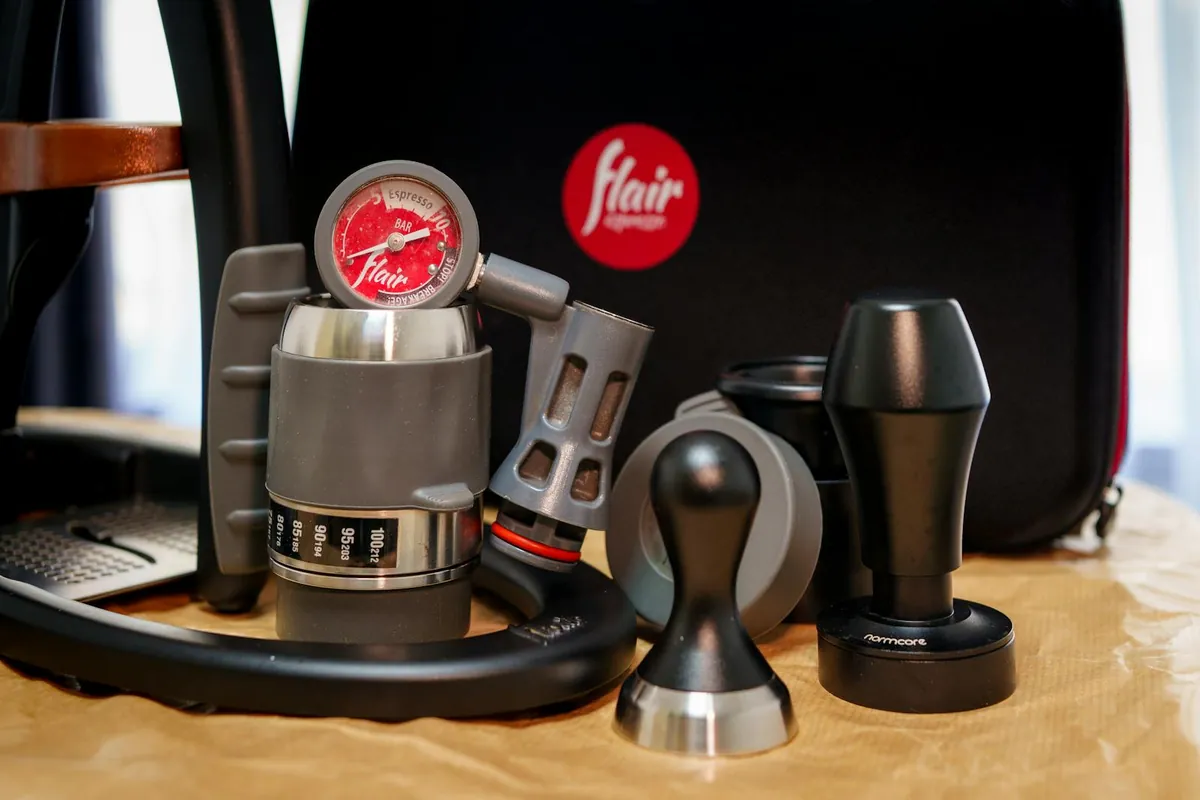
The catch: it requires effort. Each shot takes 8-10 minutes including grinding (you NEED a good grinder – see my grinder roundup), boiling water, preheating the portafilter, and pulling. Not for groggy 6 AM mornings.
Fellow Stagg EKG + Hario V60 ($165 combo) – pour-over
The Fellow Stagg EKG variable-temperature kettle ($149) plus a Hario V60 ceramic dripper ($25-30) is the budget specialty pour-over setup. The kettle holds temperature precisely (190F, 200F, whatever you set), and the V60 is the world-standard pour-over device.
Pour-over is the most forgiving manual brewing method – no pressure required, just water control. With practice, you’ll make coffee that rivals $5 cafe pour-overs.
Coffee maker comparison under $200
| Maker | Price | Time per cup | Best for |
|---|---|---|---|
| Bonavita Connoisseur | $179 | 1 min | Daily drip drinkers |
| Flair NEO Flex | $109 | 8-10 min | Espresso obsessives |
| Stagg + V60 | $165 | 4-5 min | Single-cup ritual |
| Mr. Coffee 12-cup | $45 | 1 min | Don’t care about taste |
| Aeropress | $40 | 3 min | Travel + single cup |
What about Keurig and Nespresso pods?
Convenient, expensive per cup ($0.65-0.90 per pod), bad for the environment, and the coffee quality is mediocre. If you’re drinking 2+ cups a day, pods cost $400-650 a year versus $80-150 for whole beans. Skip pod machines.
The grinder is more important than the machine
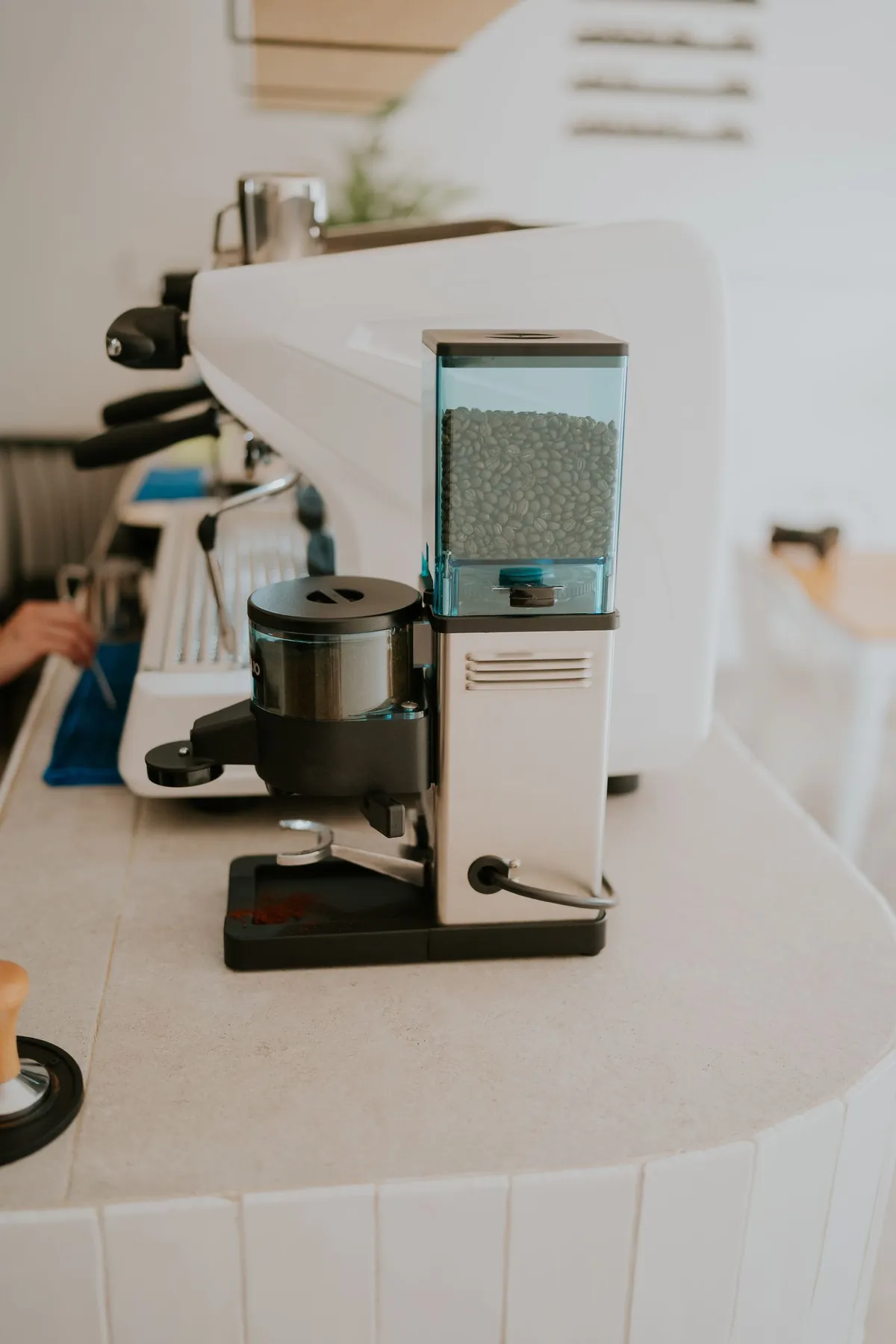
This is the secret that took me 6 months to learn: bad grinder + great machine = mediocre coffee. Great grinder + okay machine = great coffee. Spend $100-150 on a burr grinder before upgrading your coffee maker.
My picks: Baratza Encore ($169) for filter coffee, OXO Conical Burr ($110) for budget all-purpose, Capresso Infinity ($109) for the value option.
Coffee beans matter more than the machine
A $40 Mr. Coffee with fresh, quality beans makes better coffee than a $300 machine with stale Folgers. Buy whole beans roasted within 30 days, from a real roastery. Trader Joe’s bagged beans are fine. Costco’s Kirkland beans are fine. Just avoid anything that’s been on the shelf for months.
My weekly haul: a 12oz bag from a local Columbus roaster ($16-18) or Trader Joe’s Joe Coffee ($8). I avoid pre-ground except for emergencies.
So which one should you buy?
Drinking 2+ cups a day, want minimal effort: Bonavita Connoisseur.
Single coffee obsessive who wants espresso: Flair NEO Flex.
Want a slow morning ritual: Stagg EKG + V60.
On a strict $50 budget: Aeropress + cheap kettle.
For more kitchen guides, see my best coffee grinders under $100, best egg cookers, and my 15 kitchen hacks for American home cooks.
Frequently Asked Questions
Is a $200 coffee maker worth it over a $50 one?
Yes, if you drink coffee daily. The brew temperature and water distribution on SCA-certified machines is genuinely better. You’ll taste it on day one. A $50 machine brews at 180F (too cold); SCA standard is 195-205F.
What’s the difference between drip and pour-over?
Drip is automatic – machine pours water through grounds. Pour-over is manual – you pour water through grounds at a controlled rate. Pour-over offers more control over extraction (better for single specialty cups); drip is more convenient for bigger batches.
Do I need a fancy kettle for pour-over?
For best results, yes. A gooseneck spout lets you pour slowly and precisely. Variable temperature lets you brew at the right temp for the bean. The Fellow Stagg EKG is the gold standard at $149.
How long do coffee makers last?
Quality drip machines: 5-7 years. Espresso machines: 3-5 years with regular descaling. Manual equipment (Flair, V60, Aeropress): basically forever. Descale every 3 months with white vinegar to extend lifespan.
