My master closet was a horror show in early 2025. Clothes from 2019, two non-matching shoes from different pairs, three identical black cardigans, and a hat I bought for one wedding that I’d worn exactly once. I spent six hours one Saturday completely overhauling it. Eighteen months later it’s still organized.
Here’s the exact process. Photos at every step.
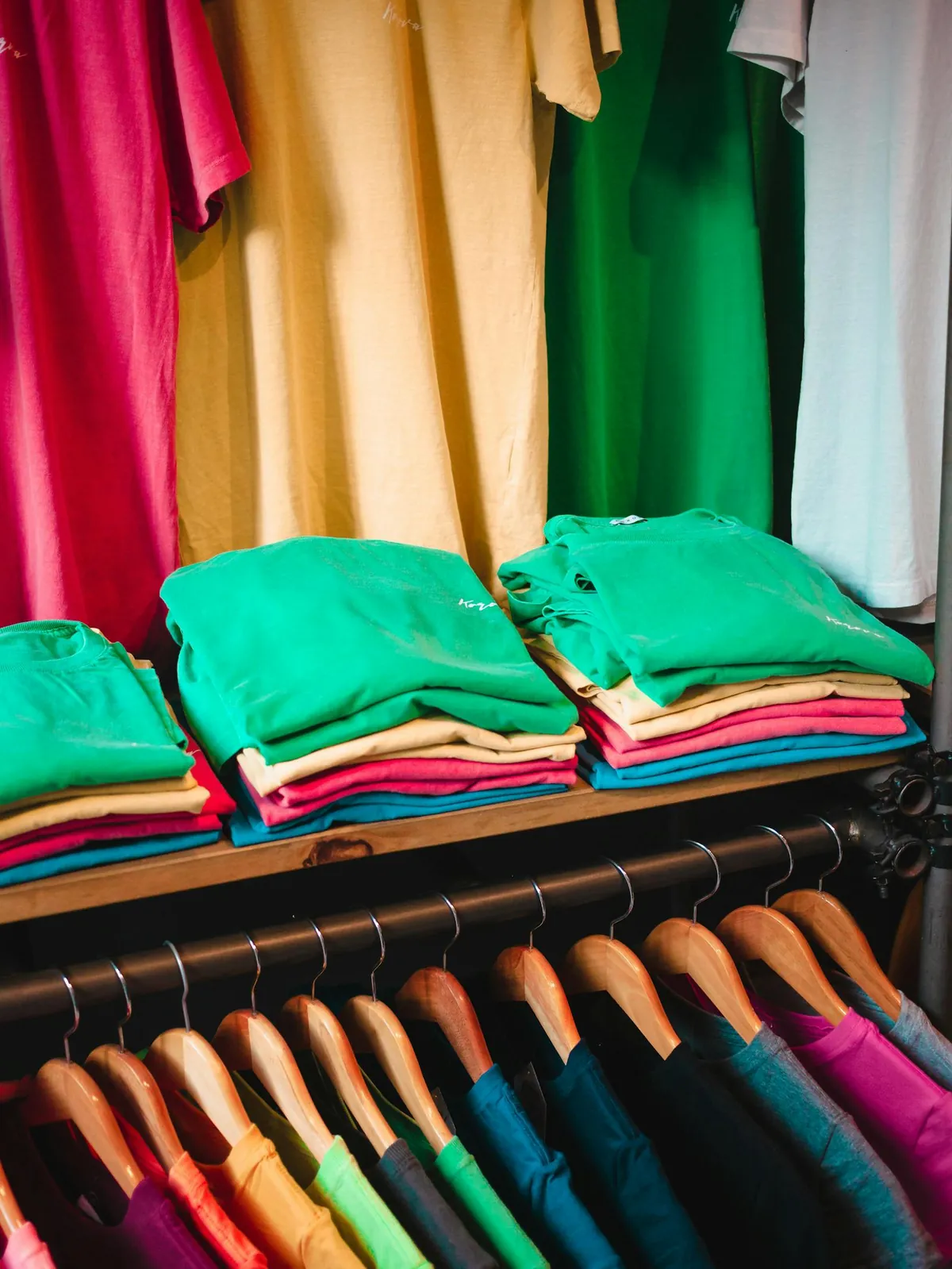
Step 1: Empty the closet completely (do not skip)
This is the step most people skip and it’s why their closet looks the same in 2 weeks. You CANNOT organize a closet without taking everything out first. Pull every single item out: clothes, shoes, accessories, bags, boxes from the top shelf.
Pile everything on your bed. Yes, your bed. The discomfort of seeing the pile is motivation to finish.
Step 2: Clean the empty closet
Now that it’s empty, vacuum the floor, wipe the shelves with a damp microfiber, dust the top shelf and any baseboards. This takes 15 minutes and is the only time it’ll be possible to clean for a year.
Step 3: The 4-pile sort
This is where people get stuck. Use these specific piles:
- Keep – I love it, wear it regularly, looks great
- Donate – good condition but I haven’t worn in 12+ months OR doesn’t fit
- Trash – stained, ripped, stretched out, beyond donation
- Maybe – I’m not sure (HARD LIMIT: 10 items in this pile)
The Maybe pile is the trap. People put everything in Maybe and avoid decisions. Cap it at 10 items. Everything else goes Keep/Donate/Trash.
For Maybes: put them in a labeled box in the basement with today’s date. If you reach for any of them in the next 90 days, return them to the closet. Whatever’s left in the box after 90 days goes to donation.
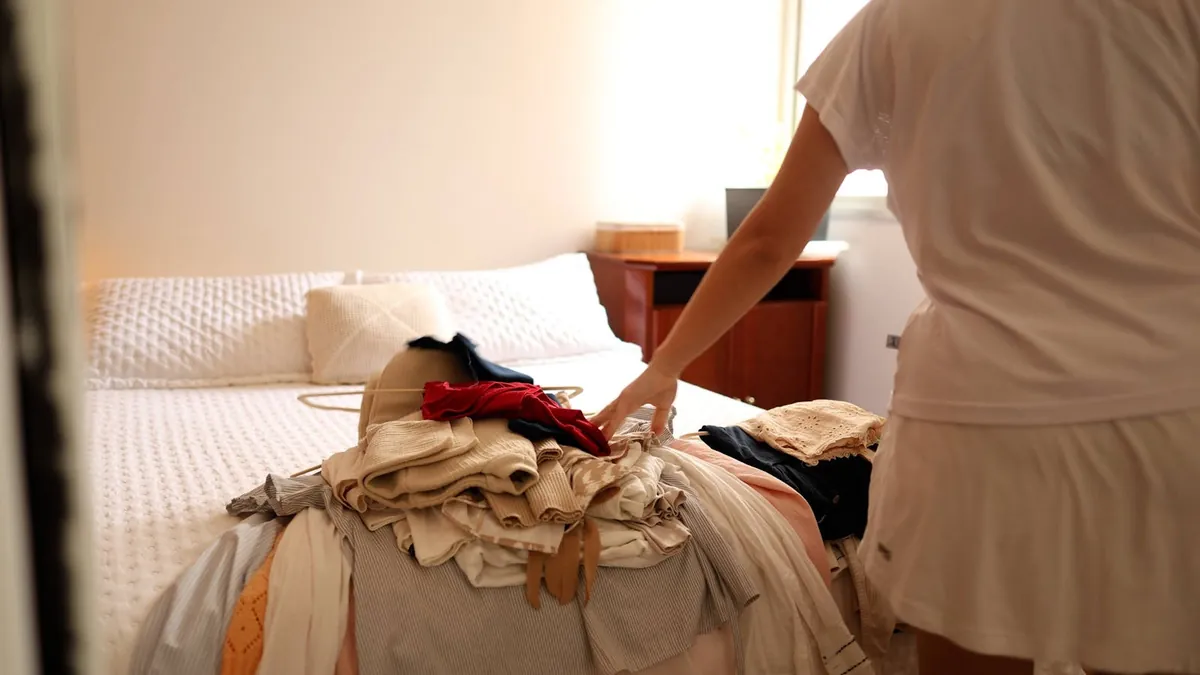
Step 4: Buy slim velvet hangers
Single biggest closet upgrade. Bulky wire hangers from the dry cleaner take up 3x the rod space of slim velvet hangers. $25 for 50 at Amazon. Doubles your hanging capacity instantly.
While you’re shopping, also pick up: clear plastic shoe boxes ($30 for 12), a closet rod doubler ($12), and 3-4 small bins for accessories ($18). Total: about $85.
Step 5: Arrange by category, then by color
Organization sequence:
- Sort the Keep pile into categories: shirts, pants, dresses, jackets, accessories
- Hang each category together (all shirts, then all pants, then all dresses)
- Within each category, arrange by color: white → cream → yellow → pink → red → blue → purple → black
- Within color, arrange by sleeve length (short to long for shirts)
This system means you can spot a missing item instantly, and you can put new items away in 5 seconds. Color-coding looks great AND functions well.
Step 6: Use vertical space with a closet rod doubler
The IKEA MULIG ($12) or any cheap closet rod doubler hooks onto your existing rod and provides a second rod 30 inches below. Perfect for hanging shirts on top, pants on bottom. Doubles closet capacity in most master closets.
Step 7: Top shelf storage with clear bins
The top shelf is dead space for most people. Use clear plastic bins (not cardboard – cardboard hides what’s inside) labeled by category: “winter sweaters,” “swimwear,” “scarves,” “hats.” Clear bins let you see contents without pulling them down.
Step 8: Shoes – inventory and store
Shoes are the second-biggest closet space issue. Options:
- Clear shoe boxes – $30 for 12, stack on shelf or floor
- Over-door shoe organizer – $15 holds 24 pairs (great for kids’ closets)
- Tilted shoe shelf – mid-range option, holds 15-20 pairs
- The IKEA BISSA shoe cabinet ($75) for entryway overflow
How many shoes do you actually wear? Probably 8-12 pairs in regular rotation. Donate the rest.
Step 9: Set up maintenance habits
Closet organization fails because there’s no maintenance system. Three habits that keep it organized:
- Hanger flip rule: turn all hangers backwards on January 1. As you wear items, flip the hanger forward. After 6 months, anything still backwards = donate.
- One-in-one-out: for every new item that enters the closet, one item leaves.
- Seasonal rotation: twice a year (March and September), pull out off-season clothes, store in bins.
Closet organization supply checklist
| Item | Cost | Source |
|---|---|---|
| 50 velvet slim hangers | $25 | Amazon |
| 12 clear shoe boxes | $30 | The Container Store |
| Closet rod doubler | $12 | IKEA MULIG |
| 3 large bins for top shelf | $18 | Target |
| Drawer dividers | $15 | IKEA VARIERA |
| TOTAL | $100 |
What NOT to do
- Don’t buy a closet system before organizing – waste of money. Organize first, see what storage you actually need.
- Don’t keep “skinny clothes” – if you’ve gained or lost size, current-fit clothes only. Save one outfit if you’re emotionally attached.
- Don’t fold sweaters and stack them – the bottom one is forgotten forever. Fold and stand vertically in a drawer (KonMari fold).
- Don’t keep “trend” pieces from 5+ years ago – they look dated. If you haven’t worn it during its trend cycle, you won’t.
- Don’t organize when you’re rushed – block out 6 hours. Trying to do this in 2 hours produces a half-done mess.
For more organization guides, see my 20 decluttering mistakes, things to throw away, and IKEA storage hacks.
Frequently Asked Questions
How often should I reorganize my closet?
Major overhaul once a year. Seasonal rotation (swap summer/winter clothes) twice a year. Quick 15-minute tidies monthly. The annual overhaul takes 6 hours; the monthly tidies prevent it from getting bad.
What’s the best way to store seasonal clothes?
Clear plastic bins on the top closet shelf or under the bed. Avoid cardboard (attracts moisture and bugs), vacuum bags (compress fabrics but wrinkle them), or attic storage (temperature swings damage clothes).
Should I organize my closet by color or by category?
Both – category first (shirts together, pants together), then color within each category. This is how retail stores arrange merchandise because it’s easiest to find items. Pure-color (all reds together) looks pretty but is harder to use.
How do I deal with sentimental clothing I never wear?
Take photos. Keep the absolute top 3-5 items in a labeled “memory box” outside the closet. The rest: photograph and donate. The memory is in the photo, not the fabric.
