Bailey is a six-year-old golden retriever and I love her endlessly, but she has thrown up on my carpet exactly 47 times. (Yes, I counted – I keep a Note on my phone.) Three of those were pumpkin pie incidents during Thanksgiving 2024, the rest are mystery. I’ve removed enough pet stains to write a small book.
Here’s what actually works, what doesn’t, and why enzyme cleaners are non-negotiable for pet owners.
Why do pet stains keep coming back?
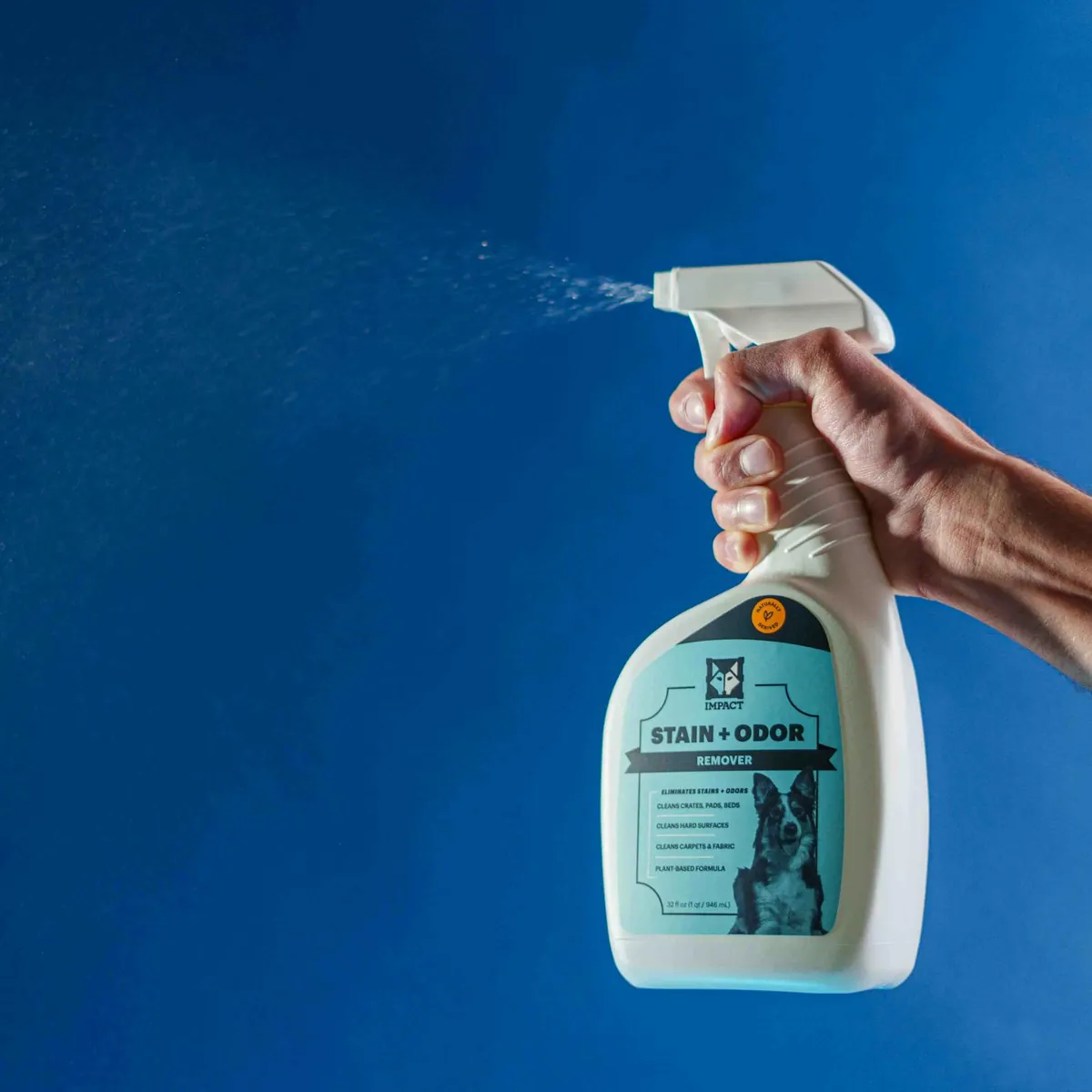
Because regular cleaning products don’t break down the proteins in urine and feces. Soap, vinegar, baking soda – they mask the smell to YOUR nose, but your dog still smells it and considers that spot a bathroom. The only product category that chemically destroys the proteins is enzyme cleaners.
This is why my friend Lisa’s dog kept peeing on the same dining room corner for 6 months until she switched to Nature’s Miracle.
How to remove fresh pet urine from carpet
- Blot, don’t rub. Press a stack of paper towels onto the spot, stand on them if needed. Keep replacing until no more liquid transfers.
- Pour cold water on the area to dilute remaining urine (about 1 cup for a quarter-size stain), then blot again.
- Saturate with enzyme cleaner – use enough to soak the carpet AND the padding underneath. Urine soaks deeper than the surface; your cleaner needs to follow it.
- Cover with a damp towel and let sit for the time on the bottle (usually 15 minutes to overnight).
- Blot dry, vacuum the area once fully dry.
How to remove old/dried pet urine from carpet
Old urine is harder because the proteins have bonded with the carpet fibers and concentrated as the water evaporated. Use a UV blacklight ($12 on Amazon) in a dark room to find old stains – they glow yellow-green.
Once located: re-wet the stain with warm water, then saturate heavily with enzyme cleaner. Let sit for at least 8 hours (overnight is best). You may need to repeat 2-3 times for stains older than a month.
Enzyme cleaner comparison
| Product | Price | Best for | Smell |
|---|---|---|---|
| Rocco & Roxie | $19.97/32oz | Dog urine | Mild fresh |
| Nature’s Miracle | $14.99/32oz | All-purpose | Mild citrus |
| Skout’s Honor | $22.99/35oz | Cat urine | Light eucalyptus |
| Anti Icky Poo | $26.99/qt | Severe old stains | Strong floral |
| Resolve Pet Expert | $8.97/22oz | Fresh stains only | Strong chemical |
My honest ranking based on testing all 5: Rocco & Roxie #1 for dogs, Skout’s Honor #1 for cats, Anti Icky Poo for emergency old-stain cases.
How to remove pet vomit from carpet
- Pick up solids first – use a flat plastic card or spoon, scoop into a paper towel
- Blot remaining moisture with paper towels
- Cover with baking soda – generous layer, let sit 10 minutes to absorb stomach acid
- Vacuum the baking soda
- Apply enzyme cleaner per the urine instructions above
The baking soda step is critical for vomit because stomach acid can damage carpet fibers if left untreated. Same goes for any acidic stain (juice, soda).
How to remove dog or cat poop stains
Pick up as much solid material as possible (gloves on, plastic bag). For dried poop, dampen with water and let sit 5 minutes before scraping with a butter knife – don’t scrub or you’ll embed it deeper.
Once the solid is gone, treat the residue with enzyme cleaner. Pet poop has both bacteria AND proteins, so enzyme cleaners are essential.
What about DIY vinegar and baking soda?
Works on FRESH urine (within 1 hour), fails on dried urine. The vinegar neutralizes some odor and the baking soda absorbs moisture, but neither breaks down uric acid crystals. Your dog will return to the spot.
If you absolutely don’t have enzyme cleaner: 1 cup vinegar + 1 cup water, soak the spot, blot dry, then cover with baking soda and let sit overnight before vacuuming. Better than nothing, worse than enzymes.
When to call a professional carpet cleaner
If you’ve used enzyme cleaner 3 times and the smell persists, the urine has soaked into the padding or subfloor. At that point you need either:
- Professional steam cleaning with pet-specific enzymes (~$200 for one room)
- Carpet padding replacement (only the affected area)
- Sealing the subfloor with Kilz before re-installing padding
My friend Jen had to do the full padding replacement after her cat sprayed the same spot for 8 months. She tried everything else first.
Preventing future pet accidents
- UV blacklight inspection every 3 months – catches stains before they set
- Establish bathroom routines for puppies/dogs (every 2-3 hours)
- For senior dogs – vet check; might be medical (UTI, kidney)
- For cats spraying – usually behavioral; address stress sources
- Use Feliway diffusers for anxious cats
For more home cleaning guides, see my front-load washer mildew fix, how to remove burnt smell from house, and glass stovetop cleaning.
Frequently Asked Questions
Does Rocco & Roxie really work?
Yes – I’ve used it for 4 years on Bailey’s accidents. It works best when you saturate the area thoroughly (not a light spray) and let it sit overnight under a damp towel. The ASPCA seal of approval is real.
Why do enzyme cleaners take so long to work?
The enzymes are living organisms that digest the proteins. They need moisture, time, and the right temperature. Cold weather or dry environments slow them down. Cover the area with a damp towel to keep them active.
Can I use enzyme cleaner on hardwood floors?
Yes for surface stains. For urine that’s soaked into wood (look for black staining), you’ll need to sand and refinish. Enzymes don’t pull stains out of wood pores once they’ve absorbed.
What’s the best blacklight for finding pet stains?
A 51-LED 395nm UV flashlight on Amazon for $12-15 is plenty. Higher-priced lab-grade UV is overkill. Use it in a fully dark room – even a little daylight kills the contrast.
