In January 2024, our grocery bill hit $1,134 for one month. Four people, no parties, no special diets – just normal eating. My husband and I had the “okay we need to fix this” conversation that night. Six months later, we’d cut it to $760 a month without anyone in the family noticing a quality drop.
Here’s exactly what I did. None of these tactics require clipping 80 coupons or eating beans seven days a week.

How much should a family of 4 spend on groceries?
The USDA publishes monthly food cost reports. For a “moderate cost” family of 4 (two adults, two school-age kids) in 2026, the target is around $950-$1,050/month. “Thrifty” is around $700. We were at the “liberal” tier without realizing it – mostly because of name brands and convenience foods.
1. Plan meals around the weekly sales
Every Wednesday morning I check the Kroger and Aldi flyers online. Whatever protein is on sale ($2.99/lb chicken thighs, $4.99/lb pork loin) becomes the centerpiece of next week’s dinners. This single change saved me maybe $80/month on its own.
2. Costco for proteins, paper goods, and pantry staples
The Costco rule: only buy what you’d freeze, dry-store, or use within 2 weeks. I buy chicken thighs ($2.49/lb), ground beef ($4.99/lb 93% lean), eggs (3 dozen for $7), toilet paper, paper towels, dish soap, olive oil, and Kirkland trail mix. That’s it. I do NOT buy produce or bread at Costco – we waste too much.
3. Aldi for staples and produce
Aldi is where my generic-brand budget lives. Their milk is $2.59/gallon (vs $3.99 at Kroger), eggs are $1.99/dozen, butter is $4.49/lb, and their pasta is 99 cents/box. Produce at Aldi is hit or miss – I check for ripeness and don’t buy in bulk.
4. Kroger for produce and specialty items
I do my produce shopping at Kroger with their digital coupon app. Their app loads coupons automatically when you scan your card. Combined with weekly sale flyers, I get peppers for 88 cents/lb when they’d be $1.49 at Aldi.

5. The Plan-2-Cook-1 method
Cook double portions twice a week, eat leftovers for lunch the next day. This is the single biggest lunch saver. I cook one big sheet pan dinner Sunday night, one big pasta Wednesday, and the leftovers cover 4 lunches.
6. Store-brand swaps that don’t sacrifice quality
| Name Brand | Store Brand Swap | Savings |
|---|---|---|
| Cheerios ($5.49) | Kroger Toasted Oats ($2.49) | $3.00/box |
| Bisquick ($4.99) | Aldi Baker’s Corner ($1.99) | $3.00/box |
| Heinz Ketchup ($4.49) | Kroger Ketchup ($2.49) | $2.00/bottle |
| Triscuits ($4.99) | Aldi Savoritz ($2.29) | $2.70/box |
| Kraft Mac & Cheese ($1.99) | Aldi Cheese Club ($0.69) | $1.30/box |
I’ll be honest – some store brands ARE worse. Aldi cereal that mimics Honey Nut Cheerios? Not great. But Kroger’s plain pasta, canned beans, frozen vegetables, and condiments are indistinguishable from name brand.
7. Use Ibotta and Fetch Rewards
Ibotta pays cash back on specific grocery items – usually $0.25-$2.00 per item. I cash out about $35/month. Fetch Rewards scans any receipt and gives points toward gift cards – I get about $15/month in Amazon gift cards.
Not life-changing, but $50/month in basically-free money is $600/year.
8. Freeze bread, meat, and herbs
I buy bread in 2-loaf packs from Costco and freeze one immediately. Meat goes into the freezer the same day if I’m not cooking it within 48 hours. Fresh herbs get chopped, packed into ice cube trays with olive oil, and frozen – they last 3 months that way.
9. Buy whole chickens, not parts
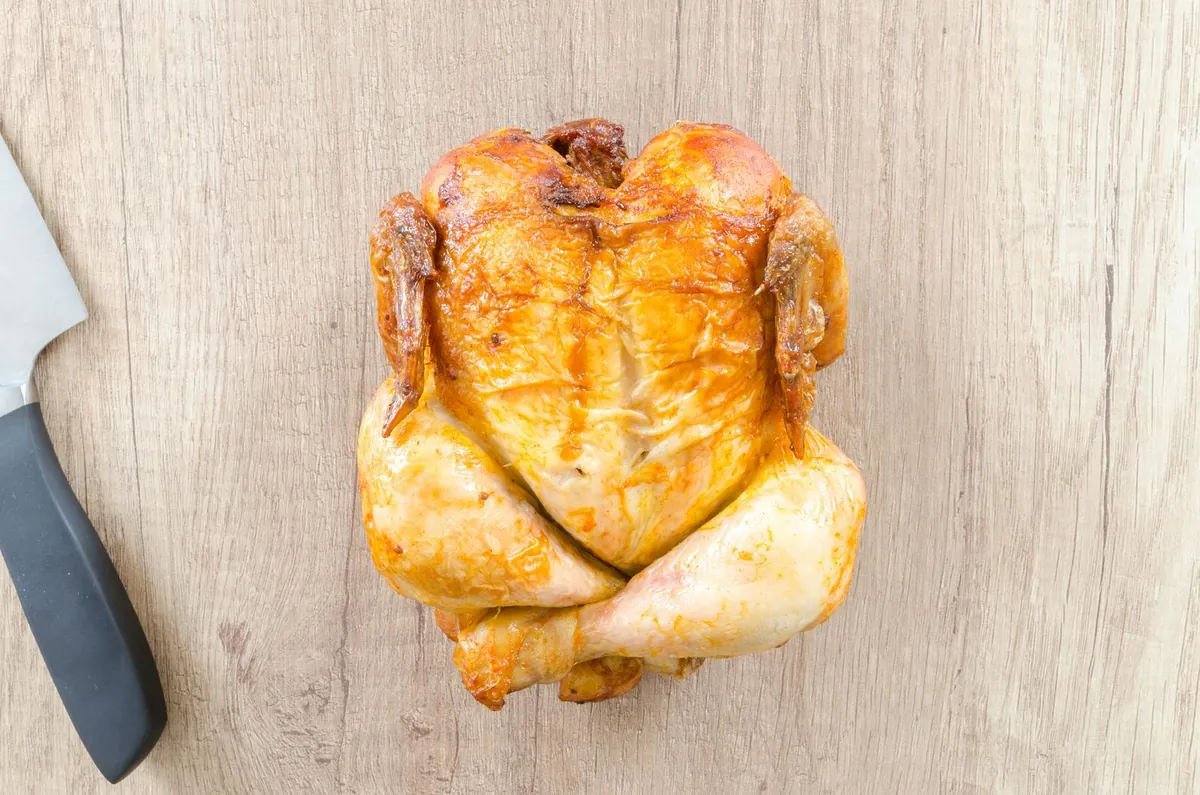
Whole chicken at Aldi: $1.29/lb. Boneless skinless chicken breasts: $4.99/lb. I roast a whole chicken Sunday, eat breast meat for dinner, shred thigh meat for tacos Tuesday, and make stock from the carcass. One $6 chicken = 3 meals.
10. The “no impulse aisle” rule
I shop with a list and don’t go down aisles I don’t need. Snack aisle and the bakery section are where my budget dies. If I need to grab milk and eggs, I go straight to those sections and out.
11. Shop alone, shop fast, shop fed
Never grocery shop hungry. Never bring the kids if you can help it. I aim to be in and out of Aldi in 20 minutes – faster = less time to add random things to the cart.
12. Cook 2 meatless dinners per week
Beans and rice, lentil soup, vegetable pasta, big salads with hard-boiled eggs. We do meatless Monday and meatless Thursday. Saves about $25/week on protein costs.
13. Buy frozen vegetables, not fresh (mostly)
Fresh broccoli at Kroger: $3.49/lb, wilts in 5 days. Frozen broccoli at Aldi: $0.95/12 oz bag, lasts months. Nutritionally similar. I buy fresh only for things we eat raw (salads, cucumbers, peppers).
14. Make a “use it up” night
Every Sunday before our big grocery trip, we have “fridge night” – whatever needs using gets used. Last week it was rice + leftover rotisserie chicken + frozen mixed veggies + an egg = fried rice for four.
15. Use a price book or notes app
I have a Notes app on my phone with the regular price of 30 items I buy weekly. When something’s on sale, I know if it’s actually a deal. Kroger butter at $3.99 looks like a sale but it’s the regular Aldi price.
For more family budget guides, see my weekly meal schedule template, how to lower your electric bill, and setting up a home office under $500.
Frequently Asked Questions
How much can I really save by switching to store brands?
For a family of 4, switching about 60% of your pantry to store brands saves $150-250/month. The trick is identifying which store brands are quality (canned goods, pasta, dairy, frozen veggies) and which aren’t (cereal, snack crackers, condiments are mixed).
Is Costco actually cheaper than Kroger for groceries?
Only on certain categories. Proteins, dairy, eggs, paper goods, and dry pantry staples: yes, substantially. Produce, bakery, and packaged snacks: often the same or more expensive once you factor in waste from buying too much.
Are cashback apps worth the time?
Ibotta and Fetch combined take me about 5 minutes per week and return $50/month. That’s a $600/year return for 4 hours of time – yes, worth it. Apps with paid memberships (Rakuten Cash Back Premium) usually aren’t.
What’s the best day to grocery shop?
Wednesday is when most stores reset weekly sales. Tuesday night you can sometimes catch markdowns on items going off sale. Sunday afternoon is the worst – everything’s picked over and the lines are brutal.
